

I am not a cis man.
No disrespect to cis men - all disrespect to everyone who acts like I am one.

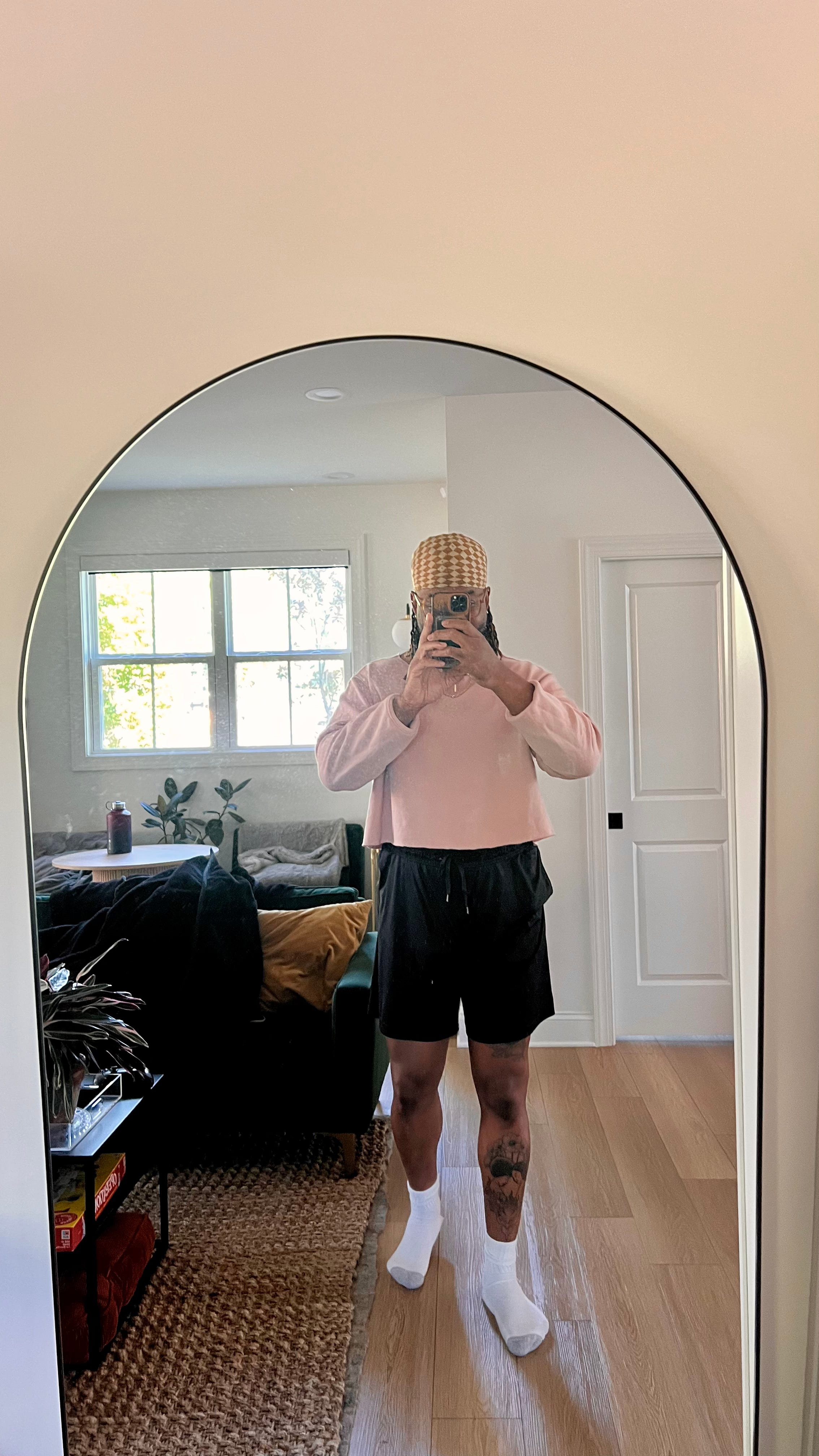
Listen to this post below:On more than one occasion recently, people have said to me, “I know you don’t identify as a cis man but…” and then proceed to say something else that makes it obvious they still perceive me as one.
Baby, let me be very clear: I am not a man.
I am not a soft man.
I am not a feminist man. 🤮
I am not man-lite.
I am not a healing man.
In fact, I hate the way folks sandwich softness, emotional intelligence and manhood together paradoxically, gesturing toward the gendered scripts that say “women are inherently emotionally intelligent” and men are not. It absolves everyone who is not a cis man of doing the deep emotional work that we should all be doing.
We are all products of the emotional work that we put in regardless of gender. Don’t get me started on the ways I’ve experienced communication/conflict/emotional attunement breakdowns from marginalized-gendered folks. Being socialized or nurtured or sadly forced into more emotional labor, as marginalized-gendered folks often are, does not equate to more emotional intelligence (embodiment, the ability to name and communicate one’s emotions, self- and co-regulation, coping skills, healing practices, ritual, grief-tending, etc.) But that’s a complex conversation for another day.
There are an infinite number of shapes that a man can take, yet none of them fit me1 because, in case you missed it earlier:
I am a not a man.
I am non-binary, because I identify as neither man nor woman.
I am transmasculine, because I am moving away from what I was assigned at birth (boy/man). But I am not moving toward womanhood. Meaning, I have no desire to transition medically (this is not a requirement to access transness). And for now, I tend to lean more masculine in my presentation socially. Mostly because I work in healthcare and my gender play is often relegated to the weekends.
Some people grow up with a very deep internal sense of their gender. They were assigned male or female at birth (AFAB/AMAB) and feel a sense of belonging and community. Conversely, some folks feel a deep pull toward the other side of the binary (they were assigned AFAB/AMAB and feel the opposite). Neither of these scenarios have ever felt accurate for me.
I watched my single Mama split wood and install a ceiling fan with one hand, and braid my hair, and gently rub Vick’s on my chest with the other hand in ways that - to my childhood eye - didn’t fit neatly into the scripts of Black womanhood that she identified with. And it made me realize, well before I had the language, that I wanted to define myself beyond the binary, beyond the AMAB identity assigned to me. I wanted to become someone who could build things, write poetry, sew, learn to DJ, run fast, jump high, lift heavy, feel and name my emotions, navigate conflict, wear a crop top and paint my fingernails or rock a fresh fade and a fitted cap, cook well, keep a clean house so my brain can relax, give and receive pleasure with attunement to my needs and the person engaging in pleasure with me. I want people to see me and make no assumptions about me. I want people to be curious, to challenge their preconceptions and await for the story of Me to unfold. That’s the way I approach people, the way that I queer my relationship to the things we are taught to assume about people because of the bodies that they exist within.
A while back, I read this book by Kit Heyam called “Before We Were Trans.” In the book, Heyam tells stories of transness across time-space. He acknowledges that “transness,” as a contemporary Western colonial construct, cannot fully capture how folks experienced their gender throughout history and across cultures. Still, he uses the term - not to box people in or decide who “counts” or who doesn’t - but to highlight that gender fluidity, gender play, and gender subversion existed well before the boxes (read: cages) we use today.
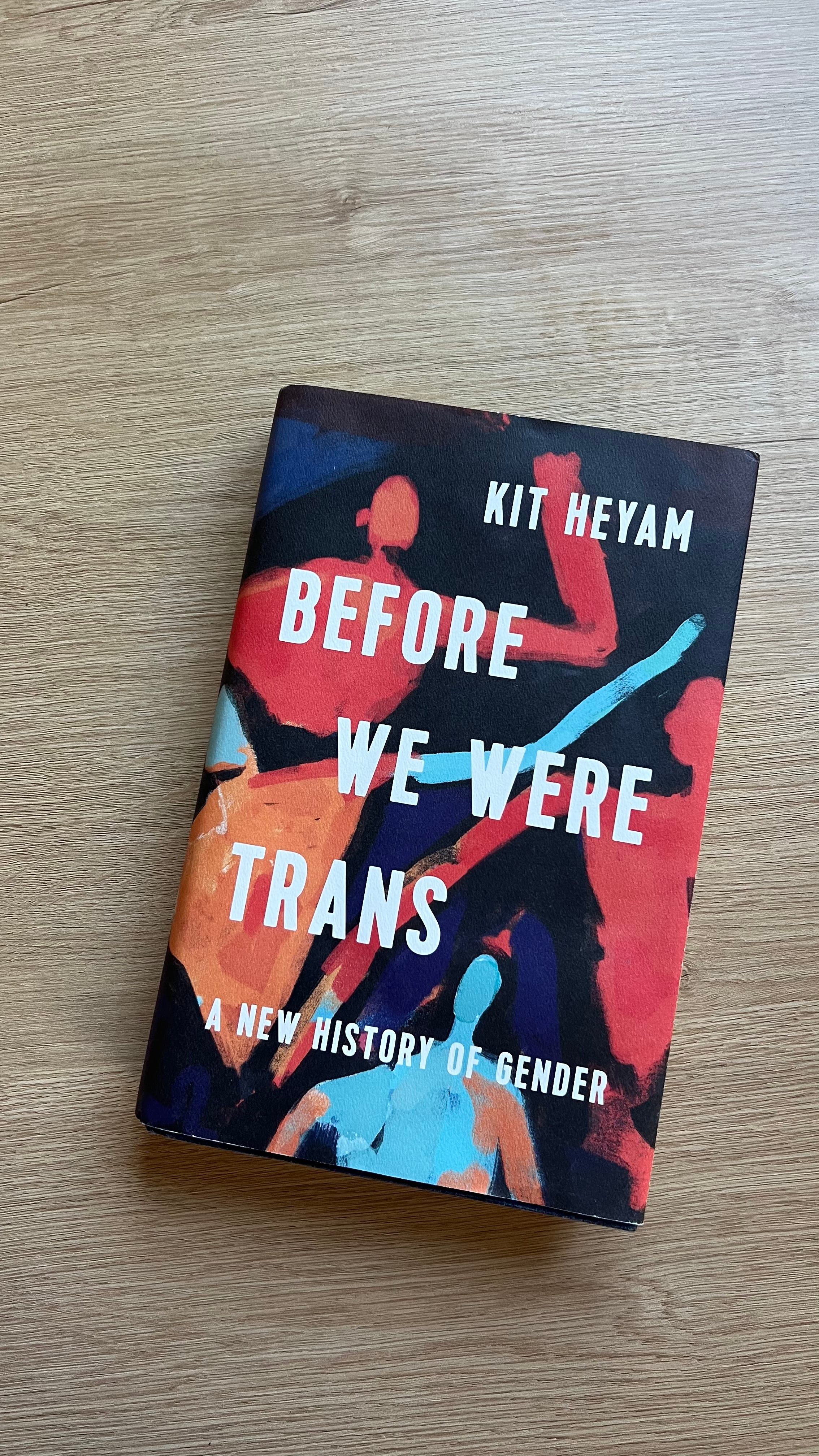
Kit’s writing single-handedly gave me the language to name my own experience retroactively, and as it continues to emerge. He wrote the following:
On Race x Gender
“The way we experience and understand gender is inextricable from race…trans liberation and anti-racism are inextricable struggles, and commitment to the former must necessitate commitment to the latter” gesturing toward the “Black feminist theory” of folks like “Kimberly Crenshaw, Audre Lorde, bell hooks, B Camminga, Emi Koyama [and others].”
Transness as who we are, not what we do.
“Talking about being trans as an identity, rather than an action help us to understand transness as relating to who you are, not what you do — a crucial step in undermining the argument that transitioning means adhering to gender stereotypes. It makes space for people who can’t, or don’t want to, transition socially or medically. And talking about moving away from the gender we were assigned at birth, rather than from male to female or vice versa, helps our definition to be clearly inclusive of non-binary people: people like me, who don’t identify as male or female all of the time.”
On the effects of being misgendered and the harm of trying to “prove realness”
“The experience of being misgendered chips away at our internal sense of security in the realness of our identities. Even our defenders speak in these terms, implying that asserting our realness is the most effective way to remind people that we deserve human rights: ‘Trans women are real women’; ‘Non-binary people are valid’. It’s never clear what ‘realness’ really means, but there’s a vague, unspoken community consensus over the things that may be considered to trouble it. They’re all the messy things that our ‘classical’ trans narrative prefers to leave out: fluidity, non-binary identities, play, external motivations, ambiguity.”
On the risks of gender noncomformity for AMAB folks
“…people who are perceived as AMAB and who want to express femininity — whether they be trans women, non-binary people, gay men, or anyone else; and whether their motivations relate to identity, aesthetics, play, or some combination of factors - have to negotiate these risks, and make difficult decisions about whether feminine expression is worth potentially compromising their psychological or physical safety.”
I am many, many things. To my siblings, I’m their bro. To my Mama, I’m her son. To my nieces, I’m their uncle. To my girlies, I’m their girly.2 A well placed, “Biiiiiiitch, lemme tell you” feels euphoric to my ears. And when my wife calls me, “Pooka Pot” or “Niggggaaaaa!!!!” my heart dances all the same.
But one thing I am not, is a man. And the girlies that get it - get it. Cause in the words of @ryan_ken_acts, “When you see me as Non-binary, the shit just hits different.”
I am paraphrasing this sentiment from Kit Heyam’s “Before We Were Trans.” I could not find the original phrasing for a direct quote.
“To my…I’m their….” - I once heard Big Freedia use this language on a Youtube clip and it resonated deeply with me. Paraphrased to fit my own experience.
Delightful! This brought back so many memories of my own opening to myself.
I am grateful that you are able to understnad this at much younger age than I was when the light went on in me. I was in my 60's and it was largely due to sitting with, listening to people much younger than me that gave me the language to understand what I had been experiencing internally my entire life. That retrospective understanding is so essential for my ability to live free now. It is the holy process of transformation and celebration.
Deepening, deepening.
Ahhh there is so much in here that resonates with me!
I'm agender in the way that wants to unsubscribe from all gender chat but having to constantly remind people at work ironically means subscribing to more. It means I've given up and just end up ciswomaning there.
Because I constantly have to remind people about my access needs in order to be able to communicate / literally do my job, and I can't chose how people respond to race, and then reminding people how my name is spelled.
Adding gender to that box and explaining I can use multiple pronouns becomes another thing to have to deal with.
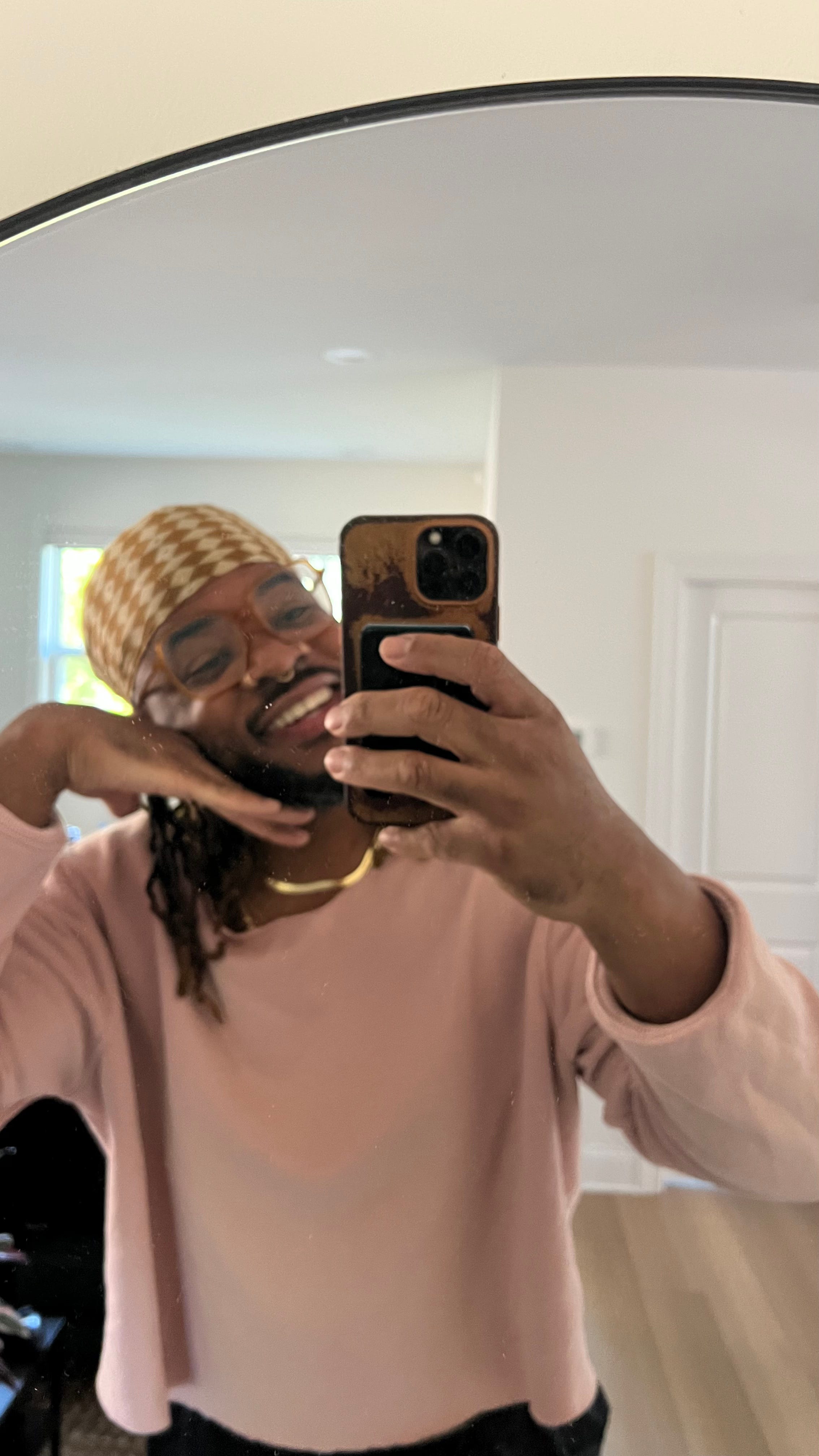
Also I love your outfit. That pink is wonderful and the tone with the mustard in your headband/scarf and hints of gold in the jewellery is fantastic 🤩